
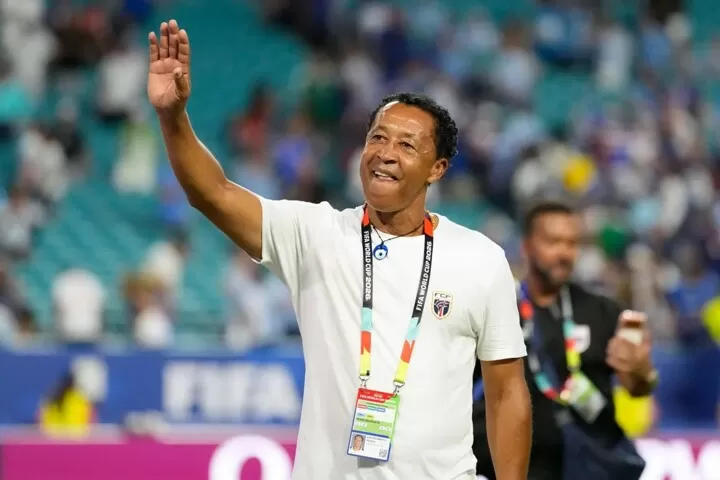
The remarkable rise of Cape Verde at the 2026 FIFA World Cup is not a miracle. It is the product of planning, coaching, belief, and a football culture that continues to grow across Africa.
At the center of Cape Verde’s success is coach Pedro Brito ‘Bubista’, a man who has transformed a nation of just over half a million people into one of the most respected teams at the tournament.
For years, football conversations have been dominated by traditional powerhouses from Europe and South America. Yet Cape Verde’s performances have once again demonstrated that modern football is no longer decided by population size, history, or financial muscle alone.
As many analysts have pointed out during this World Cup, a well-coached team can compete with anyone.
Whether it is Cape Verde, Jordan, Uzbekistan, or Sierra Leone, tactical organization, player development, and strong leadership can bridge gaps that once seemed impossible to overcome. Bubista’s Cape Verde side embodies exactly that philosophy. Disciplined without the ball, fearless in possession, and united in purpose, the Blue Sharks have become one of the tournament’s biggest stories.
Following Morocco’s Footsteps
Cape Verde’s success did not emerge in isolation.
African football has been steadily climbing for decades, but the watershed moment came in 2022 when Morocco became the first African nation to reach a FIFA World Cup semi-final.
Morocco defeated football giants including Belgium, Spain, and Portugal on their historic run to the last four.
That achievement shattered a psychological barrier. It proved that African teams were capable of more than merely participating; they could genuinely challenge for football’s biggest prizes.
A Continental Shift
The signs have been visible for some time. Senegal won the Africa Cup of Nations and consistently competed at major tournaments.
Egypt reached a World Cup final qualifying playoff and continues to produce elite talent.
Ivory Coast delivered one of the greatest comeback stories in AFCON history by winning the continental title after nearly being eliminated in the group stage.
Meanwhile, nations once considered outsiders—including Cape Verde, Comoros, and Mauritania—have demonstrated that the gap across the continent is shrinking rapidly.
Coaching Is the Great Equalizer
What makes Cape Verde’s story particularly powerful is that it highlights football’s greatest equalizer: coaching.
Bubista has not had access to the resources enjoyed by the world’s richest football nations. What he has done is create a clear identity, maximize the strengths of his players, and instill an unwavering belief that they belong on the biggest stage.
The lesson is simple: talent matters, but organization, preparation, and leadership matter just as much.
Cape Verde’s World Cup campaign is a reminder that football remains the world’s most democratic sport. On any given day, a well-drilled team with a clear plan can stand toe-to-toe with the game’s traditional giants.
The Respect Is Finally Arriving
For decades, African football has often been discussed in terms of potential rather than achievement.
That conversation is changing.
Morocco’s semi-final run in 2022 opened the door. Cape Verde’s emergence in 2026 is helping push it even wider.
The success of African nations at this World Cup is not a surprise to those who have followed the continent closely. Better academies, improved coaching structures, stronger domestic leagues, and growing tactical sophistication have been building toward this moment.
African football is no longer seeking validation from the rest of the world.
It is earning respect through results.
And if Cape Verde’s incredible journey under Bubista has taught us anything, it is that the next great World Cup Cinderella story may not be a surprise at all—it may simply be the new reality of African football.

