
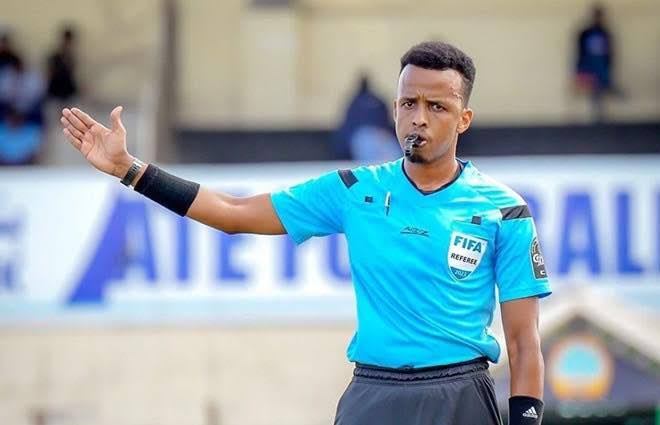
VANCOUVER, Canada – Canadian authorities have indicated that Somali referee Omar Abdulkadir Artan would be welcome to officiate FIFA World Cup matches in Vancouver, offering a glimmer of hope after the match official was denied entry into the United States and subsequently ruled out of the tournament by FIFA.
Artan, who was selected among the 52 referees appointed for the expanded 2026 FIFA World Cup, was set to make history as the first Somali referee to officiate at football’s biggest tournament. However, his dream came to an abrupt halt after he was denied entry upon arrival at Miami International Airport despite reportedly holding a valid travel visa.
The controversy has sparked global debate about immigration policies and their impact on international sporting events, particularly as the 2026 FIFA World Cup is being jointly hosted by the United States, Canada and Mexico.
Canada Signals Support
British Columbia Premier David Eby publicly stated that Artan would be welcomed in Vancouver, one of Canada’s host cities for the tournament. Reports from Canada suggest local leaders believe the Somali official should be allowed to participate in matches staged on Canadian soil despite the challenges he encountered in the United States.
The gesture has been widely interpreted as a show of solidarity with the referee, whose exclusion has generated sympathy across the football community.
However, despite Canada’s willingness to host him, FIFA has maintained that Artan cannot participate because all World Cup referees are required to be part of centralized training and operational preparations based in the United States.
Why Was Artan Denied Entry?
US authorities have offered varying explanations regarding the decision.
According to statements from US Customs and Border Protection, Artan was deemed “inadmissible due to vetting concerns” following additional inspection procedures after arriving from Istanbul. Officials did not initially provide detailed reasons for the refusal.
Later reports citing US administration officials alleged that authorities had identified information linking Artan to individuals suspected of involvement with terrorist organisations. No public evidence has been released to substantiate those claims.
Artan himself reportedly underwent lengthy questioning before being placed on a return flight to Turkey.
FIFA Distances Itself From Immigration Decision
FIFA has emphasized that it has no authority over immigration decisions made by host countries.
In a statement, the world governing body confirmed that Artan would be unable to train or officiate at the tournament and noted that immigration and visa adjudication processes fall solely under the jurisdiction of national authorities.
The decision effectively ended any possibility of the Somali referee taking part in the competition despite Canada’s willingness to accommodate him. FIFA’s operational requirements mean referees must remain within the tournament’s centralized system throughout the event.
A Historic Opportunity Lost
Artan’s exclusion is particularly significant because of his remarkable rise through African football.
The Mogadishu-born official became a FIFA-listed referee in 2018 and steadily built a reputation as one of Africa’s most respected match officials. In 2024, he became the first Somali referee to officiate at the Africa Cup of Nations, and in 2025 he was recognized as Africa’s best male referee.
His appointment to the World Cup had been celebrated across Somalia as a major milestone for the country’s football development and international representation.
Wider Concerns Ahead of the World Cup
Artan’s case has become one of the most high-profile examples of visa and travel complications surrounding the 2026 FIFA World Cup. Several reports have highlighted concerns over entry restrictions affecting players, officials and supporters from various nations.
With the tournament being marketed as the largest and most inclusive World Cup in history, critics argue that immigration challenges risk overshadowing the celebration of football.
For now, Canada’s public support offers symbolic backing for Artan, but unless FIFA’s operational position changes, the Somali referee’s historic World Cup debut appears to have slipped away despite the welcome waiting for him in Vancouver.
Disclaimer: This article is based on publicly available reports and official statements from FIFA, government authorities and media organizations. Allegations regarding security concerns have been reported by authorities but have not been independently verified in court or through publicly released evidence.

