
The FIFA World Cup has always sold itself as more than a football tournament. It is marketed as a celebration of humanity, a global festival where nationality, race, religion and politics take a back seat to the beautiful game.
That is why the exclusion of Somali referee Omar Abdulkadir Artan from the 2026 FIFA World Cup should concern everyone who cares about football.
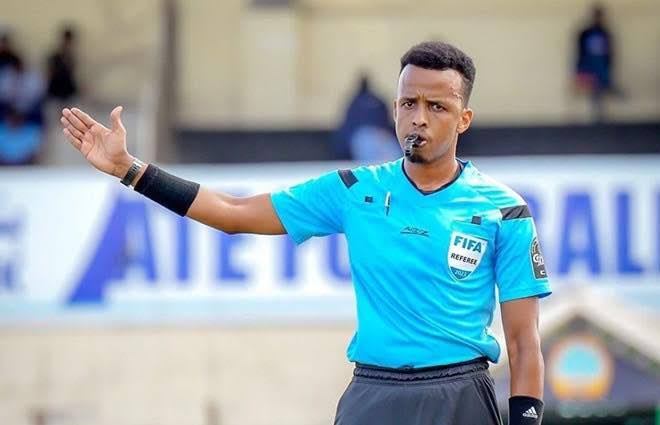
Artan was not a fan trying to sneak across a border. He was not an undocumented traveler. He was not someone attempting to bypass official procedures. He was one of FIFA’s selected referees for the biggest sporting event on the planet.
Yet despite possessing a valid travel visa, Artan was stopped by border security at Miami International Airport and denied entry into the United States. He was subsequently placed on a return flight to Istanbul, Turkey, ending his World Cup dream before it even began.
Even more troubling is that no detailed explanation has been publicly provided by U.S. immigration authorities.
The decision comes against the backdrop of a travel ban affecting several countries, including Somalia, raising uncomfortable questions about whether football’s promise of inclusivity can survive political realities.
FIFA, meanwhile, has distanced itself from the matter.
“FIFA is not involved in host country immigration processes, including visa adjudications, and has been informed by authorities that Mr Artan’s status will not be changed at present,” a statement read.
Technically, FIFA is correct. Sovereign nations control their borders. Governments decide who enters and who does not.
But football supporters have every right to ask a simple question: if FIFA cannot guarantee entry for one of its own World Cup referees, what message does that send to the rest of the football world?
Former Arsenal and England legend Ian Wright voiced what many supporters were already thinking.
“Every few hours it’s another story about fans denied, players denied, officials denied, journalists denied, now refs,” Wright said.
His frustration was understandable! The World Cup should be making headlines for goals, tactics, rising stars and unforgettable moments. Instead, conversations are increasingly revolving around visas, border checks, travel restrictions and logistical nightmares.
Wright’s description of the tournament as the “World Cup of Chaos” may sound dramatic, but it captures a growing unease surrounding an event that was supposed to unite the world.
Football is built on meritocracy. Players earn their places. Coaches earn their opportunities. Referees climb through years of assessment, training and scrutiny. Artan did exactly that.
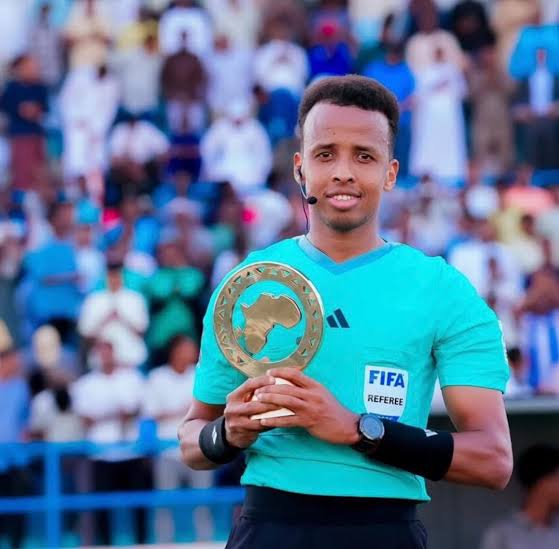
After becoming a FIFA referee in 2018, he officiated at the FIFA Under-20 World Cup, the Africa Cup of Nations and numerous high-level international fixtures. In 2025, he was named Africa’s Best Referee.
His appointment to the World Cup was not symbolic charity. It was recognition of excellence.
Had he taken charge of a match, Artan would have become the first Somali referee in World Cup history — a landmark achievement not only for Somalia but for African football as a whole. Instead, that chapter has been ripped from the tournament.
Former Somalia captain Ciise Aden Abshir put it perfectly when he argued that the decision undermines football’s commitment to fairness and merit.
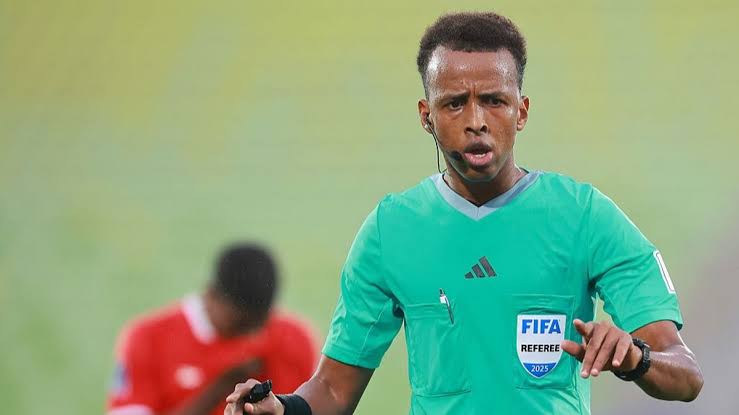
“Omar Artan is among Africa’s most respected referees and deserves the support of the entire football community,” Abshir said.
“Denying him entry to the United States and preventing him from officiating scheduled matches harms not only him personally but also undermines football’s commitment to fairness, merit, and the spirit of fair play.”
Those words cut to the heart of the issue. This is bigger than one referee. It is about whether football’s governing institutions are capable of protecting the principles they constantly promote.
The concerns do not end with Artan. Switzerland striker Breel Embolo reportedly faced uncertainty regarding his travel authorization before eventually being cleared to enter the United States. Iraq forward Ayman Hussein was detained and questioned for several hours upon arrival, while Iraq’s team photographer was ultimately denied entry altogether.
Individually, these incidents may have different explanations. Collectively, however, they paint a worrying picture.
When supporters spend thousands on tickets, flights and accommodation, they expect the focus to remain on football. Instead, uncertainty has become part of the tournament experience.
Ironically, the person at the center of the controversy has shown remarkable dignity.
Despite seeing a lifelong dream shattered, Artan refused to lash out.
“Despite the circumstances, I am in a positive mood and I am focused on the next challenges in my refereeing career,” he said.
His response reflects the professionalism that earned him a World Cup appointment in the first place. But football should not simply move on.
The World Cup belongs to the world. It is not merely a tournament hosted by a country; it is a tournament entrusted to a country on behalf of the global football community.
When a FIFA-appointed referee with valid documentation is turned away at the border and sent home without officiating a single match, football has a problem.
Ian Wright is right about one thing. Something has to be said.
Because if football’s biggest stage cannot find room for one of Africa’s finest referees, then the beautiful game risks becoming smaller than the values it claims to represent.
Disclaimer: This article is an opinion piece and reflects the views, analysis, and interpretations of the author based on publicly available information at the time of publication. The opinions expressed do not necessarily represent the views of FIFA, the United States government, tournament organizers, or any individuals mentioned in the article. Readers are encouraged to consider official statements and additional reporting when forming their own conclusions regarding the issues discussed.

